
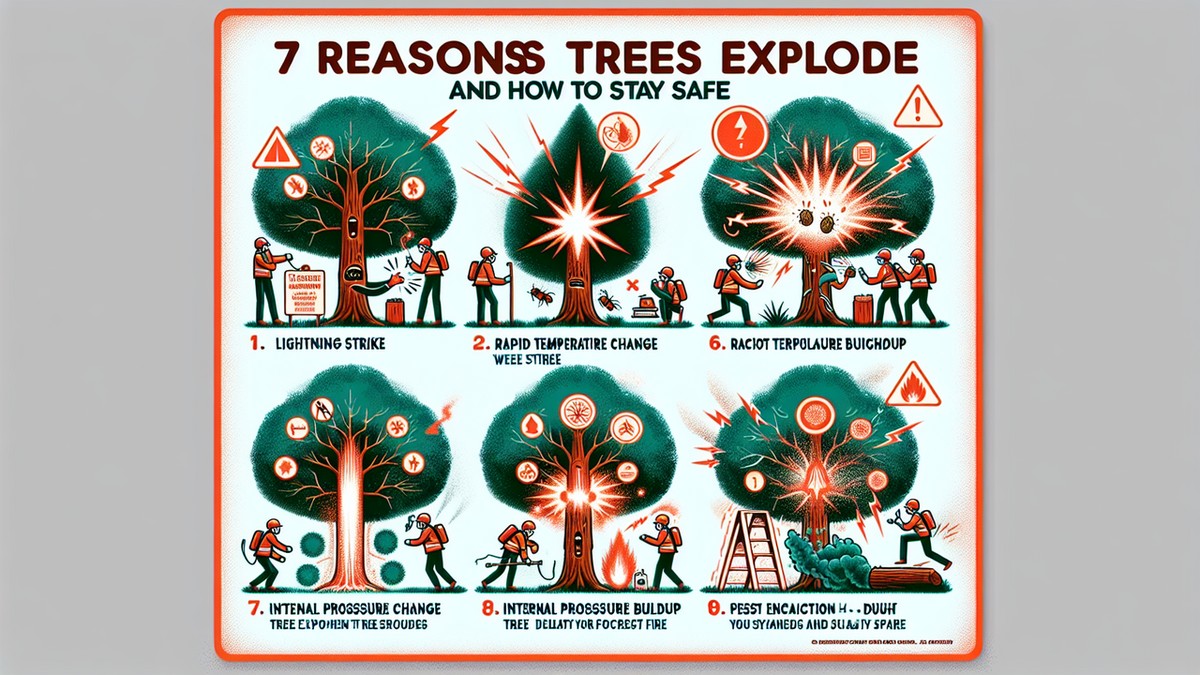
aippg.com – Trees exploding sounds like a myth, yet it can happen in real yards, parks, and forests. Most cases are not movie-style blasts, but sudden splits that throw wood and bark with force. Understanding what drives these events helps you spot risk early and respond safely.
People often notice a loud crack, flying shards, or a trunk that opens like a seam. The cause is usually pressure building inside the tree or a rapid change in conditions. Weather, decay, and hidden structural stress are common triggers.
This guide explains why trees exploding occurs, what signs to watch for, and how to reduce danger near homes and trails. If you suspect a hazardous tree, treat it like a safety issue, not a curiosity. Keep distance and get expert help.
Trees exploding: what it really means in nature
In everyday terms, trees exploding refers to a sudden, violent split of the trunk or large limbs. It may sound like a gunshot, then reveal long cracks and missing bark. The “explosion” is usually stored energy releasing at once.
The energy can come from internal pressure, tension in wood fibers, or trapped moisture that flashes into steam. Sometimes the tree has been stressed for months before it fails. A calm day can still end with a sudden rupture.
These events vary from small limb bursts to full trunk separation. They can damage property, injure people, or block roads. The risk rises when people stand close to compromised trees after storms or freezes.
How internal pressure builds inside a tree
Trees move water and sap through vessels that react to temperature and humidity. When conditions shift quickly, pressures inside the wood can change fast. A weakened trunk may not flex enough to absorb that change.
Moisture trapped in cavities can also build force. If the cavity is sealed by bark and the temperature rises, gases expand. That expansion can push outward until the wood splits.
Even healthy trees carry tension as they grow and balance weight. When a crack forms, stress concentrates at the crack tip. The split can race along the grain and look explosive.
Freezing, thawing, and the classic winter split
Rapid drops in temperature can freeze water within the outer layers of wood. Ice expansion creates stress under the bark. This can cause long vertical cracks that open with a loud report.
When the sun warms the trunk after a cold night, uneven expansion can worsen the problem. That combination is a common driver of trees exploding in late winter. The sound may carry far, especially in quiet neighborhoods.
Species with thin bark or fast growth can be more prone to these splits. Newly planted trees also struggle because their tissues are still adjusting. Mulch, proper watering, and trunk protection can lower risk.
Heat, drought, and stress fractures
During heat waves, trees lose water faster than they can replace it. Drought makes wood more brittle and less able to flex. Small cracks can enlarge suddenly under load.
Sunscald is another factor, especially on exposed trunks. The bark heats up, then cools quickly at night. Repeated cycles can weaken the outer layers and lead to a sharp split.
If you hear popping or see fresh bark separation, keep clear. Trees exploding in heat is often tied to hidden decay and dry, stressed wood. A certified arborist can assess the structure safely.
Trees exploding risks, warning signs, and safety steps
Most injuries happen because people approach a damaged tree too closely. A partially split trunk can fail again without warning. Treat any fresh crack as unstable.
Storm cleanup increases exposure to falling limbs and shifting trunks. If trees exploding occurred during a storm, there may be more damage overhead. Look up for hung branches and cracked unions.
Safety starts with distance and professional evaluation. If a tree threatens a home, power line, or busy walkway, call local services or an arborist. Avoid DIY cutting on a compromised trunk.
Decay, insects, and hollow trunks that fail suddenly
Fungi and insects can hollow a tree while the outside still looks solid. That creates a thin shell that cannot hold normal tension. Under wind or internal pressure, the shell can rupture.
Watch for conks, soft spots, carpenter ant activity, or sawdust-like frass. Mushrooms at the base may signal root decay. With decay present, trees exploding becomes more plausible during temperature swings.
Tapping with a mallet can hint at hollowness, but it is not a full diagnosis. An arborist may use sounding, resistance tools, or visual tree assessment methods. Early removal or pruning can prevent a dangerous failure.
Lightning, trapped steam, and bark blowouts
Lightning can superheat sap, turning water into steam in seconds. The steam expands and can blow bark off in strips. This is one of the closest real-world examples of trees exploding.
After a strike, you might see long scars, missing bark, or splintered wood. The tree may die back over weeks, increasing later failure risk. Keep people away, especially during storms.
In high-risk areas, lightning protection systems can be installed on valuable trees. They are not a guarantee, but they can reduce damage. Regular inspections also help identify weakened trunks after a strike.
What to do if you hear a loud crack near a tree
If you hear a sharp crack, move away and avoid standing under branches. The first split may be followed by more movement. Do not assume the danger has passed.
Keep children and pets inside, and mark off the area if possible. If trees exploding caused debris near a roadway or power lines, contact local authorities. Never touch limbs on wires or near poles.
For trees near your home, schedule a prompt assessment. Ask for risk ratings, recommended pruning, or removal options. Proactive maintenance is often cheaper than emergency cleanup and repairs.
Key takeaway: trees exploding is usually a sudden structural split driven by pressure, temperature change, decay, or lightning. The best defense is early warning, safe distance, and professional care. When in doubt, treat the tree as unstable and act cautiously.